… with sensor technology and data for efficient and reliable machining
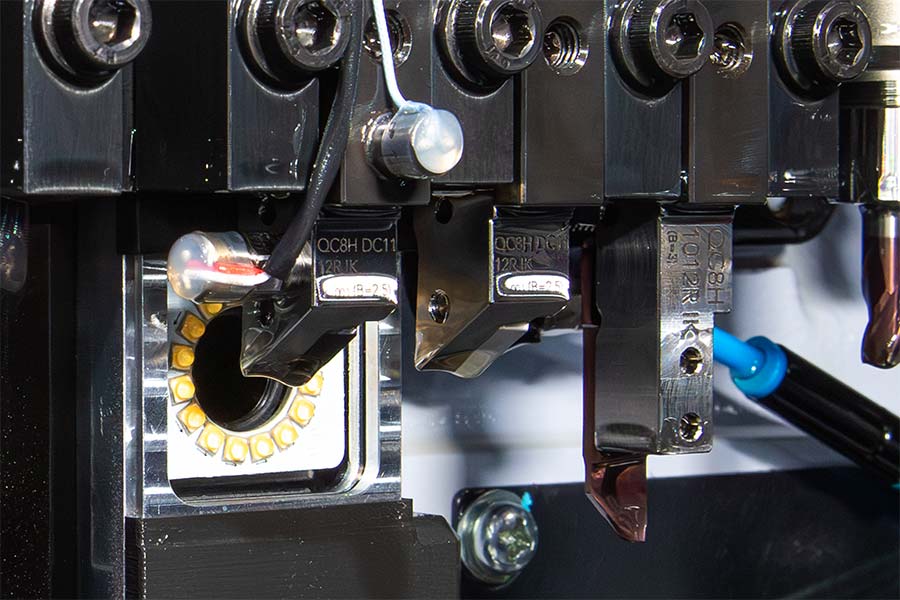
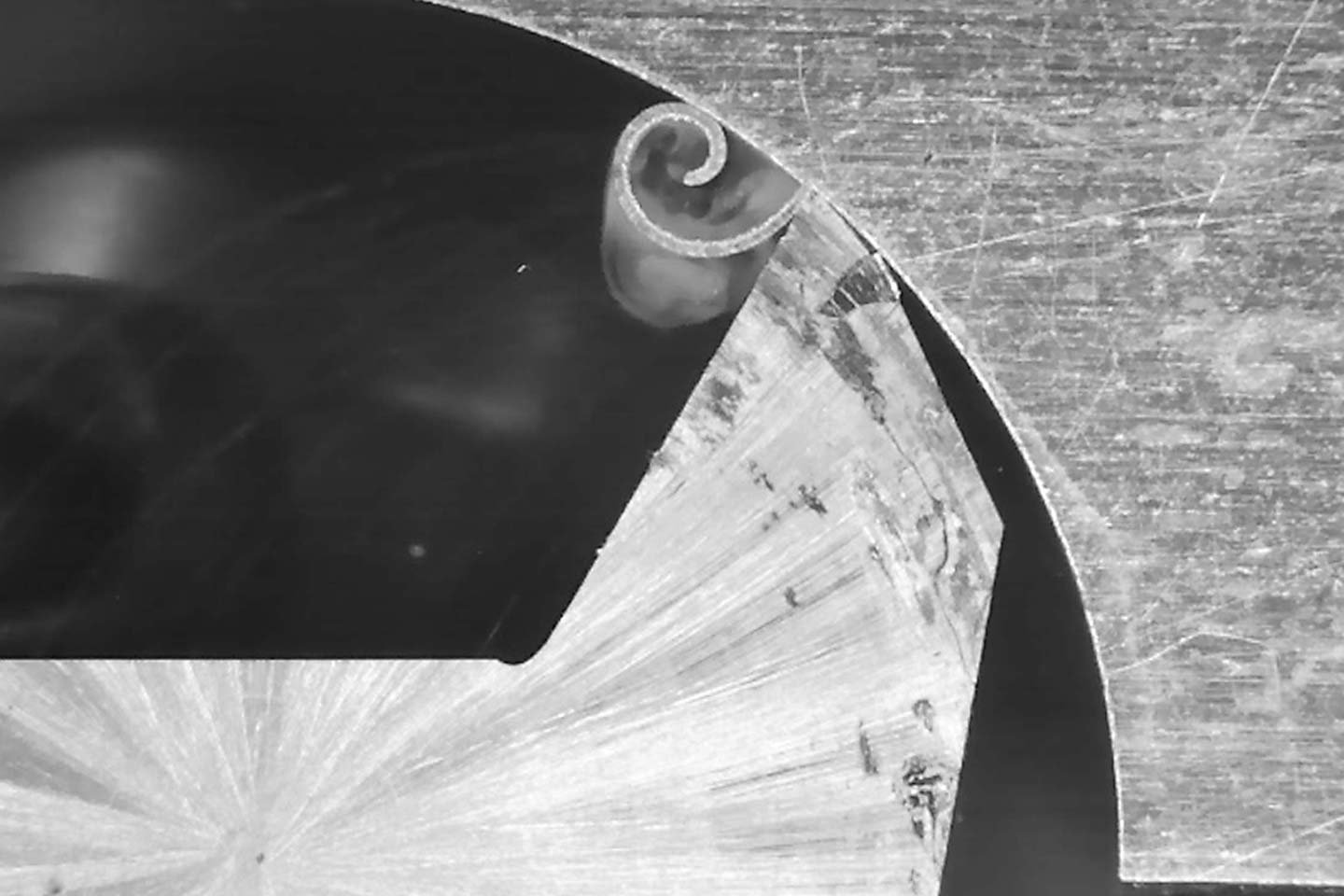
Camera for detecting tool wear behind the linear tool magazineof the sliding headstock automatic lathe
For many years, Blaser Swisslube has been developing metalworking fluids that are used worldwide in a wide variety of machining processes. The combination of basic research, its own technology center, and application-oriented development enables the company to tailor products specifically to real manufacturing conditions.
The focus is on understanding the entire machining process – i.e., the interaction between the machine, tool, material, machining parameters, and metalworking fluid. To precisely record and understand these complex interactions, Blaser Swisslube relies on sensor technology, digital data acquisition, and evaluation.
On the machine side, spindle loads, axis positions, and macro variables are recorded. In addition, vibration sensors at several positions measure vibrations in the range from 10 Hz to 10 kHz – ideal for detecting phenomena such as the runout of the bars in the magazine, chattering during machining, and changing cutting forces. Pressure, flow, and temperature sensors monitor the cooling lubricant supply, while air quality sensors quantify the oil mist concentration in the machine environment.
Automatic wear measurement
The optical wear measurement is a proprietary development by Blaser Swisslube: a camera automatically captures images of the tool so that the wear mark width can be measured without manually interrupting the process and removing the tool.
This wealth of data provides unprecedented transparency across the entire machining process. Data-based analyses enable even the smallest changes in machining behavior to be detected at an early stage—a decisive step toward reproducible, economical tests and stable series production processes.
From measured values to process improvement
The evaluation of the data allows the performance of different cutting oils to be compared accurately. For example, when turning lead-free brass alloys, it was shown that no relevant tool wear (vB <0.02 mm) occurred over 1000 minutes of engagement time – with consistent cutting forces, constant surface quality, and dimensional accuracy in the micrometer range. The stable process proves the excellent lubricating and cooling performance of the cutting oil used, but also its contribution to process reliability and surface quality.
The topics of occupational safety and sustainability can also be substantiated with measurement data. In an experiment with a grinding machine, an air quality sensor quantified the amount of oil mist. The oil mist concentration was reduced by up to a factor of 15 by adjusting the anti-mist additives to the base oil. This not only reduces health risks and the risk of fire, but also significantly improves the workplace environment.
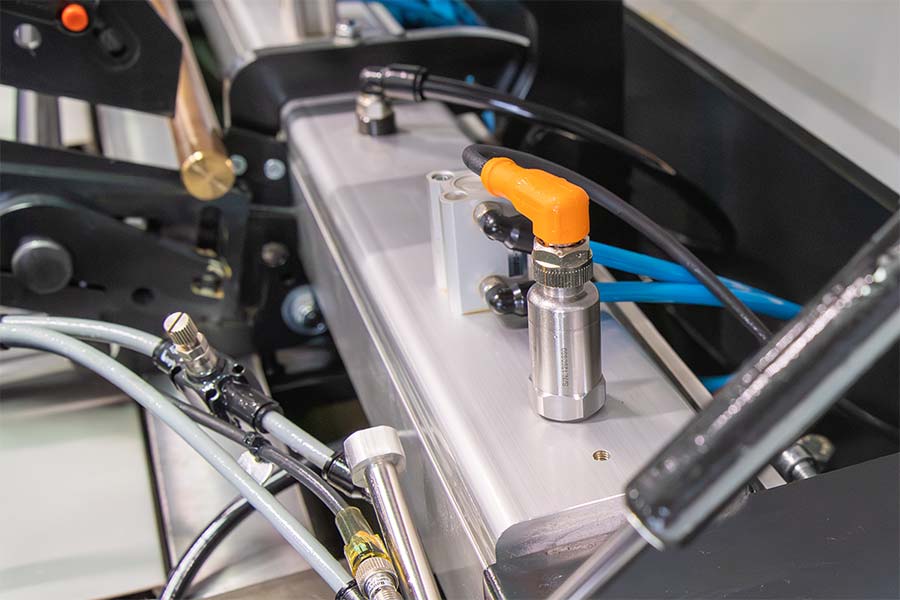
Vibration sensor in the LNS bar feeder magazine
Intelligent data management
The large amount of sensor data is collected via the Microsoft Azure IoT Stack and analyzed in real time, so that experiments can be safely stopped if any definable limits are exceeded. In addition, Power BI helps to create dashboards that visualize the current process status and highlight trends, anomalies, and potential for improvement.
Measurable added value
Using modern sensor technology, Blaser Swisslube is able to objectively prove the effectiveness and added value of its high-performance cutting oils. The combination of process knowledge, data-based analysis, and practical testing methods creates the basis for optimized machining processes – with maximum productivity, high process reliability, and measurable customer benefits.